


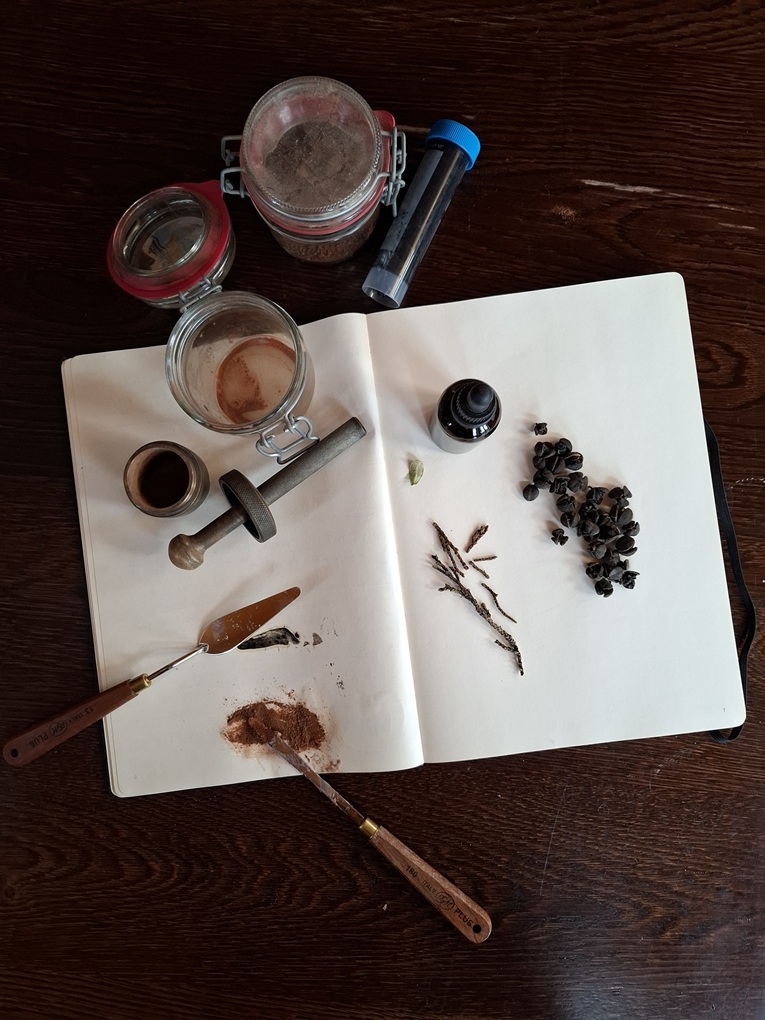
The Ngāi Tahu Māori Rock Art Trust, in partnership with the Bioeconomy Science Institute and Paemanu, a Ngāi Tahu Contemporary Visual Arts Trust, received a Marsden Fund Council Award to support a three-year research project focused on Māori rock art, also known as tuhituhi o neherā or ana whakairo.
The objective of the project is to gain new knowledge that will help to better protect and conserve sites across the Ngāi Tahu takiwā and beyond, and to celebrate and revitalise of practice of ana whakairo through contemporary Ngāi Tahu visual arts practice.
Non-invasive techniques, which do not touch or damage the artworks, are being used to understand the ingredients of various ana whakairo by scanning the artworks in-situ, in ana – caves and overhangs. Other related taonga in museum collections will also be studied in the same way, and information related to the use of kōkōwai (red ochre), ngārehu (soot) and other materials used to create the artworks will be collated.
Palaeoecology, the study of the past ecosystems, will be used to understand how the plants and animals around the rock art sites have changed over centuries. This can help to determine if the ingredients of pigments were sourced locally, and how changes in the ecosystems surrounding the sites can affect their preservation. Geological analysis will be used to better understand the source of pigments used in the artworks.
Lead Ngāi Tahu artist-researchers, Moewai Rauputi Marsh, Turumeke Harrington, Kate Stevens-West and Kiri Jarden will contribute to the findings of the research. Artists will work towards understanding how each ingredient may have been prepared, what ratio of ingredients were used, and how the pigment may have been applied. They will also be working towards creating new artwork for exhibition along with other Ngāi Tahu artists.
Paemanu understands ana whakairo to be part of their whakapapa as visual arts practitioners. The opportunity to research and work alongside scientists, archaeologists, historians and kaitiaki of these taonga is an amazing opportunity.
Concurrently, Ngāi Tahu archaeologist and curator Dr Gerard O’Reagan has been selected by The Royal Society Te Apārangi as one of twelve mid-career researchers to receive a Mana Tūānuku Research Leader Fellowship. He Tuhinga Ki Te Ao, Māori Rock Art Through Time will support surveying to understand gaps in the archaeological knowledge of rock art in Central Otago and Fiordland.
Ka Mua, Ka Muri is very much a collaborative project with Ngāi Tahu at the centre. The team at Te Ana, the rock art centre in Timaru, operated under the auspices of the Ngāi Tahu Māori Rock Art Trust has worked over the decades to build understanding through research, facilitating access, preserving and protecting ana whakairo. There is great expertise there, not only archaeological but in site preservation and documentation. They have developed strong relationships with private landowners and facilitate guided tours to lesser known and difficult to access sites. In addition to running Te Ana, a rock art museum in Timaru, the team are actively sourcing materials and contributing to the collective understanding of pigments and application.
In October, visiting researchers from Australia and Italy will be meeting with the wider team, visiting sites guided by staff from Te Ana and contributing to building local understanding towards improving the care of ana whakairo. The current investment in developing knowledge to support these taonga across Canterbury, Otago and Southland, is outstanding and will make a valuable contribution to conservation of sites and to understanding of pigments used by these anonymous artists from Waitaha, Ngāti Māmoe and Ngāi Tahu.