


 Go to Te Ana Ngāi Tahu Māori Rock Art Trust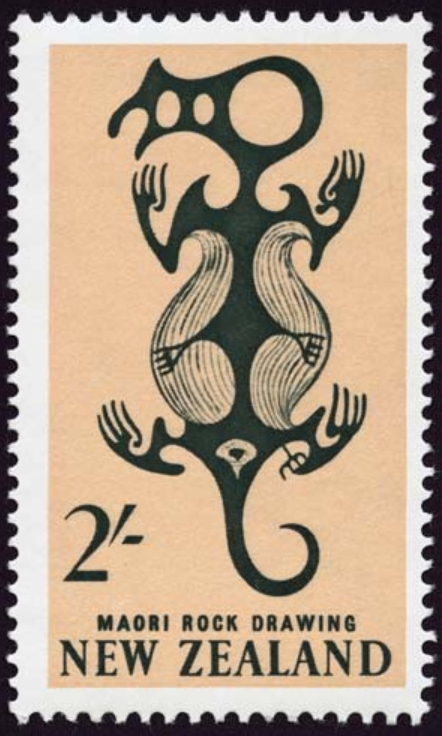
Dougal Austin (Kāti Māmoe, Kāi Tahu, Waitaha) is one of Aotearoa’s foremost experts on mātauranga Māori.
Senior Curator Matauranga Maori at Te Papa Tongarewa for over 30 years, he has recently been appointed as Senior Curator, Māori at Te Unua Museum of Southland in Invercargill.
The new role will see him return to his roots in Murihiku, which was also the place where, as a child, he first developed in interest in Māori rock art.
We spoke to Dougal about his work with the Ngāi Tahu Māori Rock Art Trust.
Kia ora, Dougal! When did you first come across rock art?
I remember the first time was with my whānau; I was maybe ten years old. Dad had arranged it, somehow, he had got us access to this rock art site, and it was in South Canterbury. It was pretty amazing. There were these huge limestone outcrops in the middle of a paddock, and rock art all the way around. I was going around with my little plastic camera taking photos, and it was absolutely fascinating to me. That was like planting the seed.
And that seed grew.
Later on, getting into my work with taoka, it was an extension of that. I’ve been on the Kāi Tahu Māori Rock Art Trust now for about 14 years.
I can imagine as a child seeing that would have quite an impact – even just visually.
Yes, it did. I was amazed. This would have been back in the 1970s. It was pretty special, so good on Dad for doing that. It really made an impact on me.
Through your curatorial eye, where do you see rock art sitting? Is it simply cultural, is it historic, is it both of those things, or is more than that?
My curatorial eye is a mātauraka Māori eye, in that my approach is to use various means to reflect and look at how Māori experience the world, and the bodies of knowledge that have been built over many generations, and that continue today. I don’t see it stuck in the past – although with rock art, we’ve had a disconnect in the transmission of the practice and knowledge.
What do you mean by a disconnect?
What I mean by that is, it’s related to when the land was sold back in the 1800s and access to those sites was cut off, maybe the missionary influence had something to do with it as well – it may have been seen as an ‘un-Christian’ thing. For whatever reason, by the twentieth century it had more or less ground to a halt and the meanings of those tohu we can only now make educated guesses at today.
So, there was a disconnect in the actual creating of rock art, but also in the handing down of the interpretation and meaning?
There is that, but now we have the reconnect, which in various ways is helping the way we view the rock art. One is, of course, artistic, and another is being through an iwi researcher – these are both ways of reconnecting. Te Ana rock art centre in Timaru is a pretty good go at providing various interpretations of why our rock art was done and what it may have meant.
Our knowledge of this art form is pretty scant, particularly Pākehā.
A lot of New Zealanders in general don’t even know it exists.
How unique are those Tohu? Those images seem like they’re pretty unique in Toi Māori?
If you go to Taranaki, there are petroglyphs of big spirals, and you’ll see that motif again in whakairo rākau, wood carving. And in the Taniwha motifs at Ōpihi, Canterbury, there are koru elements in there if you have a close look, which is a common motif in Toi Māori. But generally speaking I think rock art is kind of its own thing.
When I look at it – it’s like nothing I’ve seen before – it’s hard to explain.
I think it’s quite powerful. In the way its pared back, it’s like they’ve captured the essence of what they’ve tried to convey.
And they’re totemic in a way.
There are manu and kurī and you see other things that you don’t have any idea what they are!
Looking at how these images have been interpreted through the years – there have been artists that have taken these images and worked them into their own practice, how does that sit in our current lens?
Theo Schoon is probably the one most people think of, there were other non-Māori artists as well. On the positive side, I believe he had a real artist’s fascination with the rock art, and he valued it at a time when most New Zealander’s thought he was wasting his time or weren’t even aware of it. Then he went and touched a lot of them up with crayon, which today you just would not do. He also would make copies of the art, and they were not always true to the layout of the rock art in their shelters. It’s a tricky one. They each brought their own lenses to what they did I guess.
I wanted to ask you about this perception that seems prevalent about South Island and North art forms and there seems to be a perception that the South Island doesn’t have the same whakairo as the North.
If you’re talking about whakairo rākau – wood carving – that holds true, and it’s usually what people think of when talking about whakairo. But whakairo really is a wide range of patterned art forms, and the South is rich with whakairo, it just happens to be marked onto the whenua itself.
Are they the same whakairo as the North island or are they different?
There are some similarities, but I think they’re generally quite distinct. A lot of the art in Te Wai Pounamu has a southern look to it. That’s my view. Others might not agree.
A southern accent so to speak.
I believe so. Taranaki is known for its spirals and faces, some are immoveable and some are moveable -you could pick up some of that rock art and carry it around with you!
Do you think there’s a role for contemporary Māori artists to draw attention to rock art as an art form?
It’s already happening, being led to a large extent by Matua Ross Hemera. A couple of years ago, I went on a hīkoi led by Ross with a large group of younger iwi artists – Paemanu artists. We started way down at the sea, at the mouth of the Waitaki awa and then travelled all the way up, visiting rock art sites along the way, right up to the source of the awa, which was a lake with icebergs floating in it! I think there was real intent there in that whole hīkoi. There was real wānaka with that – embedding rock art into the minds and experiences of young Kāi Tahu artists so that they would in some way, or different ways, imbue that experience into their own practice. Whether that’s by using rock art pigments, or the imagery, but using that encounter to give more cultural significance to their art.
And I imagine it’s also important for lineage in that it carries on – it becomes a living art, rather than something historic.
Yes, absolutely. That’s what I’m wanting to see happen, that by re-engaging with it, it becomes a living art form. Making new art is really important, but not necessarily the same as what you’d see at the old sites.
What does good stewardship of existing sites look like to you? Is there enough being done, or could there be more?
Protection is a big thing. The Trust has a lot of stewardship responsibilities on behalf of the various rūnaka. One of the big issues these days is irrigation and making sure that the irrigation doesn’t get too close to where the rock art sites are. Because limestone is porous and it will soak up tons of water. There has been a rockfall at a rock art site near Duntroon that has been attributed to irrigation. It also puts people at risk who may be visiting at the time. And there’s interpretation and education, these are two things the Rock Art Centre is helping address. Our hope is that by exposing young people to the art at the Centre they will start to appreciate it.
Where are the public sites now? I guess it’s tricky because it’s a balacing act in wanting people to appreciate the sites but also knowing there’s an inherent risk with more people accessing them?
There are a handful of publicly accessible sites, they’re all in North Otago or South Canterbury. Those sites tend to be caged, so that people can’t get too close to the art itself.
I suppose it’s not even just vandalism, but just the fact that people always want to touch things.
They do. They don’ t necessarily realise that touching the art can damage it.
Do you have a particular favourite site? Is it the one you visited as a child?
That made a big impact, for sure. But a few years ago, the Rock Art Trust was having some surveying work done of rock art sites in Western Southland, and for most of the people living there it had been at least fifteen years since a few of them had accessed these sites as they were on private land. With the rock art surveying work taking place it seemed like an opportune time to arrange a hīkoi to the sites following straight on the heels of the surveying work. We had a wānaka at the marae first before we set off. We discussed how to approach and engage with the rock art. Because it had been such a long time since it was visited, there needed to be some protocols followed. So, we decided that performing karakia and karaka would be an appropriate way of approaching the sites and a means of providing cultural safety. The one site that really stood out to me is called Te Ana Whakairo. That was a really special one for me.
Is there a particular tohu that you feel connected to personally?
That’s a good question. As part of my work on the Trust, I was able to help out with the return of a piece of rock art repatriated from a museum in Seattle to manawhenua of Moeraki. First it was flown from the US and then placed into temporary storage at Te Papa. Temporary storage turned into three years, longer than expected. With my finishing up at Te Papa in June of this year I didn’t want to leave it there without my being around, so we arranged to fly it down and be held on deposit at Tūhura Otago Museum. The Moeraki people were there for the occasion and it was great seeing them reconnect with their taoka. It’s a real special one to me. It’s described as a shark-like figure; it’s a fish type form. You have to be careful labelling things though, because often then they become known as that.
But it’s not a direct shark form? You see things in images, that might not actually be what they were intended to be?
It’s an abstract shark-like form. There are undisputed kurī in the rock art. There are definitely dogs!
What would you most like people to understand about the art? Is it a matter of just getting more people to the Rock Art Centre in Timaru?
That’s one of the things, yes. Eventually, we’d like to do a book too. The SIMRAP project (South Island Māori Rock Art Project) which started in the early 90s, has been recording the sites and it’s found far more than were known to exist. There’s now a photographic record which is a very valuable archive that’s residing with Kāi Tahu archives, and there’s a lot of work to do to make that more accessible, to the iwi itself even. I think generally speaking more awareness of the importance of rock art for New Zealanders would be a good thing.
In some ways that helps protect the sites, but then as we’ve said it’s a balance of not making the site so attractive that heaps of visitors come to it.
It is a balancing act. Near Arowhenua there is an artwork which featured on a New Zealand stamp in the 1970s – a taniwha. There are other motifs there too. The Rock Art Trust had already done a lot of work in the valley where it is, and the landowner was wanting to sell his land. As things turned out the Arowhenua people purchased the farm property because of the rock art taoka. So now they have ownership and guaranteed access.
I remember that stamp very well.
That’s probably the most famous piece of rock art. In situ it’s not as clear as it is on the stamp, and I think there’s more to it than what you see on the stamp, it’s a few metres long on the rock surface. But yes, the balancing act between protecting and raising awareness is a finely tuned one.
To find out more about these amazing sites, head over to Te Ana Ngāi Tahu Māori Rock Art Trust. You can find the link here or at the top of this page.