If you liked this article share it with your friends. They will thank you later.

News

The Sound of Taonga Pūoro Rings Out Again in Okains Bay

Ngā Toi Māori, Whakaari Puoro
image

A series of traditional wānaka toi (art workshops) facilitated by Ngāi Tahu writer and musician Ariana Tikao have been held in Okains Bay. Matiu Calman (Ngāi Tahu, Ngāti Toa) attended the final hui to connect with the techniques and tools of our tīpuna.

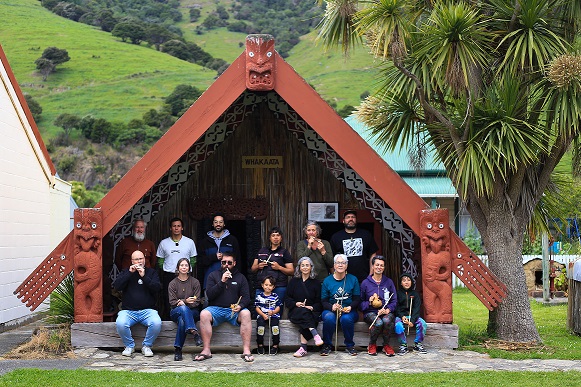
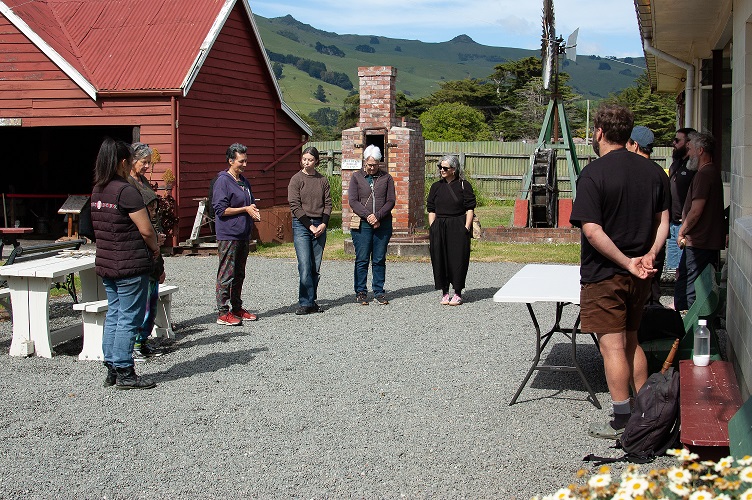
A heavy overnight deluge of pātītī rain has broken to clearer skies over Te Pātaka o Rākaihautū (Banks Peninsula). We arrive at the Okains Bay Museum for the third in a series of wānaka hosted there and organised by Ariana with funding support from Creative Communities. The museum houses a compound of heritage buildings which hold an extensive collection of early Pākehā settler and Māori artefacts. The attendees arrive: several members of the Haumanu Collective; other makers and players of taonga pūoro; weavers; and other creatives. One wahine has come from Hawkes Bay. Many have brought over their own taonga pūoro (traditional Māori instruments). They fill the air with pūatatangi – chorus of morning birdcall – as we wait for the wānaka to commence. Then we gather in the internal courtyard to mihimihi to each other.
image
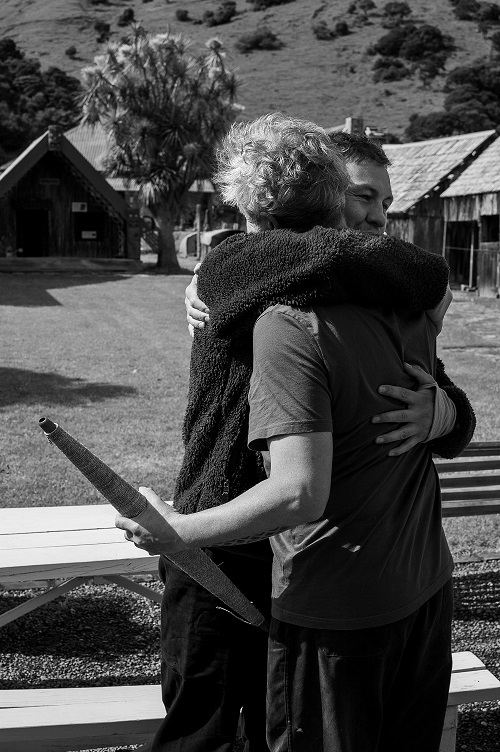
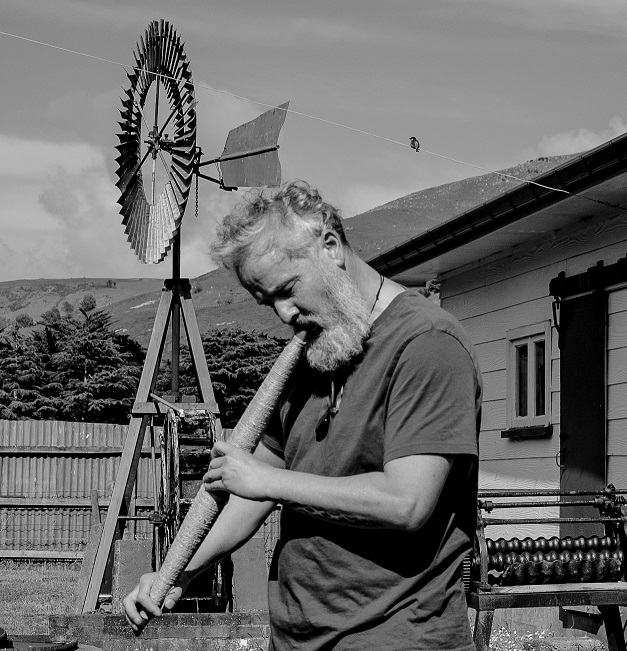
Musician Jordan Gray (Ngāti Kahungunu) has navigated the stomach-churning, narrow, snaking road by motorcycle. In one hand he carries his motorcycle helmet and in the other he’s holding the elegant pūtōrino he has lovingly crafted from kauri, and bound together with intricately-woven cords of seagrass. The pūtōrino – a sacred, traditional Māori wind instrument resembling the cocoon of the case moth – carries both male and female “voices” within in its trumpet and flute calls. He hands it to our teacher for the day, taonga pūoro master craftsman and performer Al Fraser. It’s a heck of a generous koha. They embrace. Al, who has travelled from Pōneke for the wānaka, is visibly moved and then proceeds to produce a lilting, floating flute call, then a booming deer-like trumpet roar from his new taonga – its voice both “sweet and powerful”. A small manu perches on a wire above his head.
Raukohe Hallett (Tūwharetoa, Ngāti Kahungunu) is a visitor host at the museum. She pops back and forth to the wānaka from welcoming the museum guests who are drifting in from the street to wander the sprawling grounds. One of her young sons has gone on a watercress seeking mission, while her other tama is elbows deep in the mahi of tūwiri making. I think to myself as I observe her wide grin, ‘it’s not a bad office’.
image
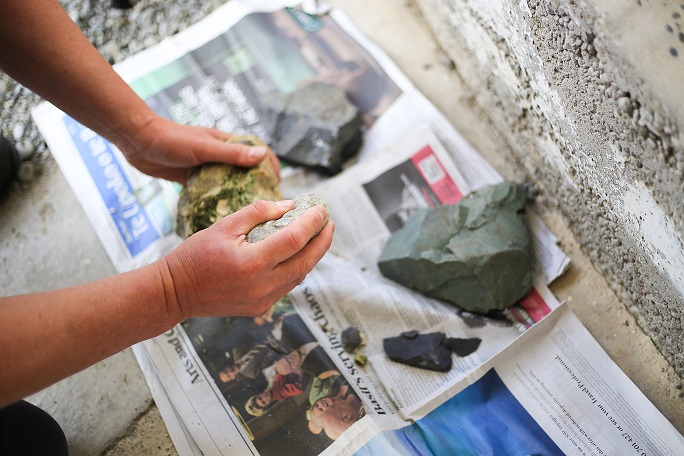
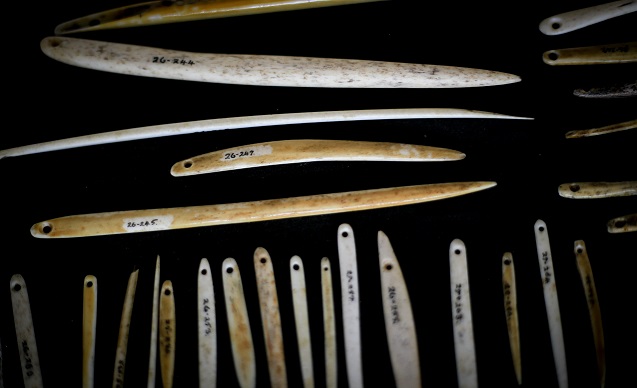
At the first wānaka, tohunga kaitā (tā moko expert) and artist Christine Harvey (Ngāti Mutunga o Wharekauri, Moriori, Te Ātiawa ki te Tau Ihu, Ngāti Toarangatira, Kāti Māmoe) taught the traditional practice of bone-needle making. That first wānaka toi was targeted to weavers, who use a variety of needles to sew kākahu and other items. Christine demonstrated the splitting of toroa (albatross) bone by covering it in cloth and then tapping it with a kōhatu (rock). The shards are then shaped into needles by hōanga (sandstone), and the eyelets formed using a traditional tūwiri (hand drill). Christine returned to teach the second wānaka as a late replacement for Ōtautahi-based artist Alix Ashworth (Ngāi Tahu, Kāti Māmoe, Waitaha). It was targeted at practicing artists to pass on traditional techniques of making pigments from kōkōwai and other natural sources such as ash.
The powdered material is traditionally mixed with tītī oil or other bird or animal fats, to make into paint. The red, volcanic, iron-oxide kōkōwai is commonly found around Te Pātaka o Rākihautū. It’s explained, much of the ancient Māori rock art in Te Waipounamu was produced using these techniques. Christine donated some of her hue (gourds) to the project for attendees to paint. The third wānaka on November 15 was offered mainly to taonga pūoro practitioners. Ariana says, due to space constraints they invited those who would be most likely to benefit. “We had to choose people who would use the skills, so it wasn’t just anybody who were vaguely interested. We wanted people that would actually incorporate the tools into their practice.”
image
image
Al is an enthusiastic and patient teacher. He explains the materials and basic principles of making tūwiri and inspires confidence in us by exclaiming enthusiastically: “let’s just get into it eh!”. He wanders from table to table to gently guide us. There’s no single right way to achieve a good, finished result, he tells us. Each taonga is unique. And as he points out a messily lashed tūwiri will drill just as well as a neatly bound one, as long as the binding is strong. I get the impression he’s more a necessity is the mother of invention man than a looks over substance type.
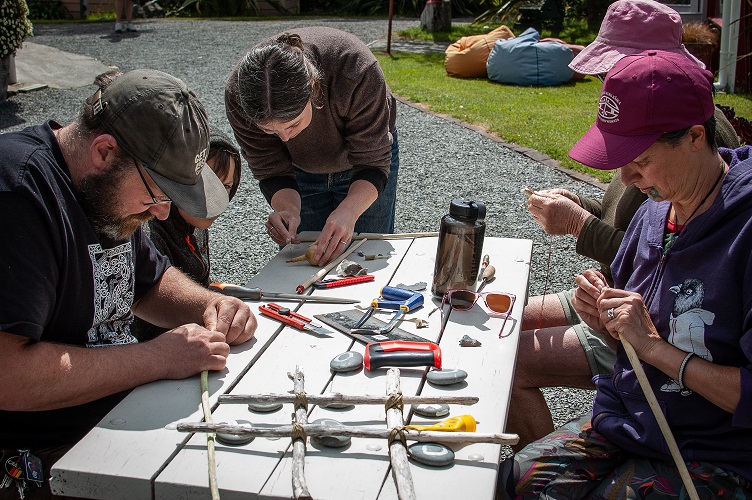
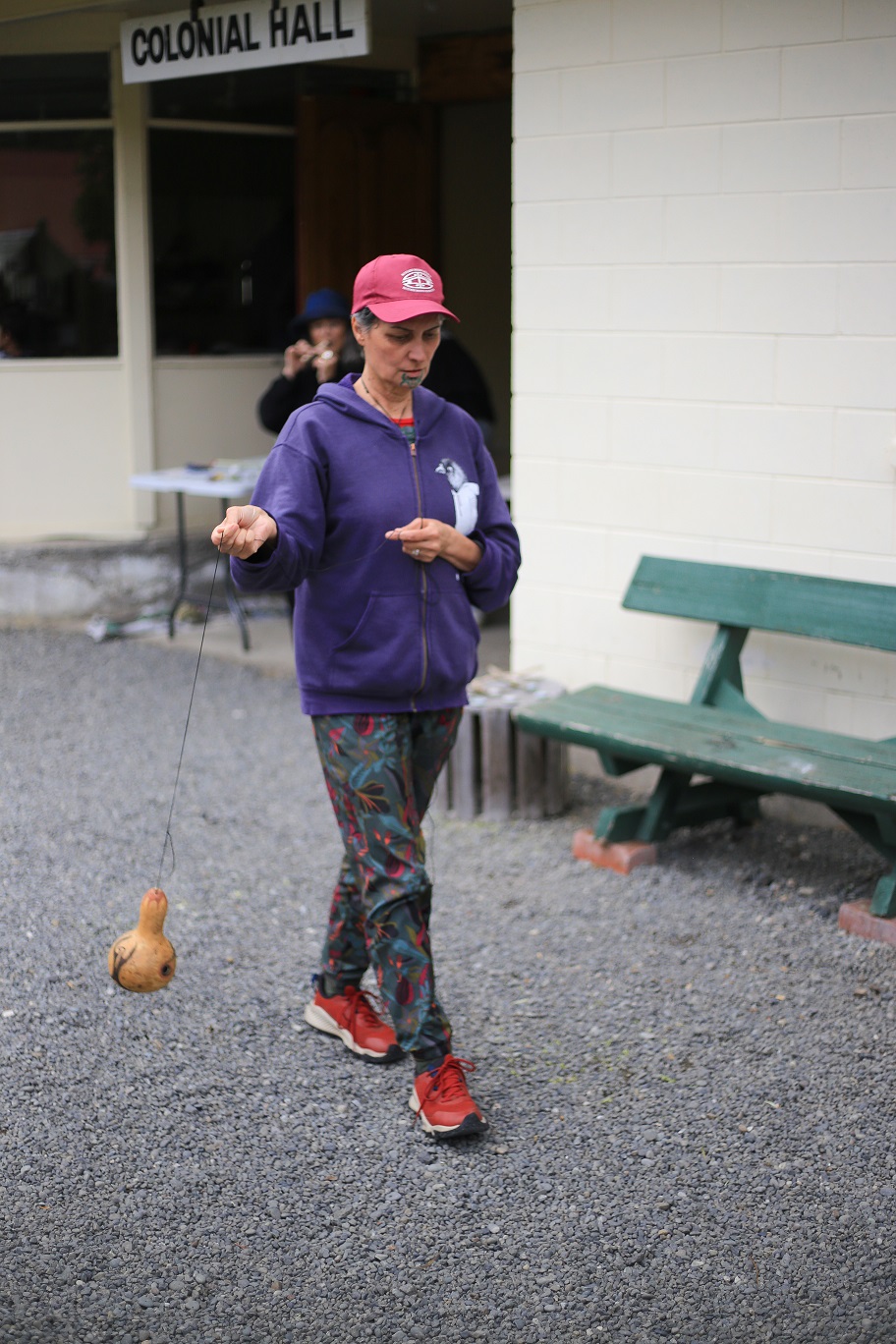
Outside the main museum building we are perched around tables making our own tūwiri, using pieces of flint and shark teeth as drill bits. The process is fairly simple, but basically the end of our tapered lengths of poroporo are notched down to house the drill heads, which are bound into place using twine or muka (muka is one of the traditional binding materials). Our tūwiri are beautifully efficient at drilling neat, countersunk finger-holes through the hard, swan bones, and rākau Al has sourced for us. We also drill two tiny holes in our fragile egg-sized hue. Once the holes are drilled, our base materials are transformed. The bone becomes a kōauau (flute made of wood or bone). The hue becomes a kōauau ponga ihu (played with the nose, producing a haunting sound), and the smaller sections of poroporo become pōrutu (a longer form of kōauau). The tiny stem of the hue – scored neatly around the circumference to snap it from the body – becomes a twittering instrument called a karanga manu. It literally translates to bird caller and is used to imitate and attract various manu.
image
Taonga pūoro musician and composer Jake Kīanō Skinner (Ngāti Rangitihi, Tūhoe) says his learning of taonga pūoro came from being a long-time “haututū” (mischievous one) – by just picking up the instruments and playing around with them. He is perhaps being humble about how he came to be such an accomplished musician. What I do know is I am struggling to get any sound from my freshly-made taonga pūoro, so I pass each one to Jake to test whether my creations have made it to instrument-grade or if they are still merely pieces of wood and bone. I am relieved to hear impressive bellbird-like sounds emerging. Later that night, with much practice, I finally make them sing too, though not as artfully as Jake.
Writer and researcher Helen Brown (Ngāi Tahu) is at the final hui. She is the Chair and Trustee – Te Rūnanga o Ngāi Tahu Representative on the museum’s Trust Board. She divides her time between the museum and her role as Kairangahau Matua Tiaki Taonga (Senior Researcher Archives) at Te Rūnanga o Ngāi Tahu. She has been instrumental in the management and care of the collection. In the last year and she has parternered with Ariana who has been employed in a curatorial role for the Māori collection.
Ariana has been working to improve the display and cataloguing of the Māori taonga held at the museum, and has been busy transferring paper-based records into a digital archive. The wānaka toi have been an extension of her museum mahi with the aim of preserving traditional techniques. As she explains: “I wanted to encourage engagement with the collection and the technologies that our tīpuna used, to hopefully be able to revive some of those practices,” she says. “It’s been great to see the level of interest and excitement. My hope is that the people who came will teach others as well.”
image
Helen later tells me she loved seeing me “geeking out” making my drills and taonga pūoro. The energy around the wānaka is consistent. It’s clear we all loved it and all had moments of “geeking out” – Helen included. It is, after all, a massive privilege to gain this knowledge. Before we leave, I help return some of the museum’s taonga pūoro tawhito (ancient instruments) to their display cases in the Whare Taoka. Ariana pauses to plays a couple of them before they are put back behind glass. They are yearning to be played. They need to be heard.
Ariana was mentored by the late taonga pūoro tohunga Richard Nunns, and regularly collaborates with other renowned players such as Bob Bickerton and Dr Ruby Solly. She has played taonga pūoro with the New Zealand Symphony Orchestra and with musicians and composers such as Canadian Phil Boniface. Her music has been heard extensively throughout Aotearoa and by receptive ears around the world. But at Okains it’s just me and Helen’s husband Grant there to listen as an orchestra of sound echoes into the rafters of the Whare Taoka. It’s jaw-droppingly beautiful, egg-shell delicate; ancient and mesmerising.
In many pockets of Aotearoa, in rooms such as the Whare Taoka at Okains Bay Museum, and through initiatives like these wānaka toi, life continues to be breathed into the treasured voices from the past so we can carry them forward into the future. Thanks to people such as Ariana and Helen, Christine and Al; Jake and Jordan, the mahi and memory of our tīpuna is still very much alive. Tihei mauriora!
image
image
Subscribe to our Newsletter

Fill in your details below.

Subscription
Name
Name